Responding when the water rises
The Indo-Pacific region stands on the frontlines of the global climate crisis. From super typhoons and flash floods to earthquakes and tsunamis, communities across this region are facing increasingly complex and frequent emergencies. In 2025 alone, natural hazards affected over 29.3 million individuals across 17 different countries in the region. And, climate change seems to worsen these risks: rising temperatures and a super El Niño in the making have contributed to more severe weather events.
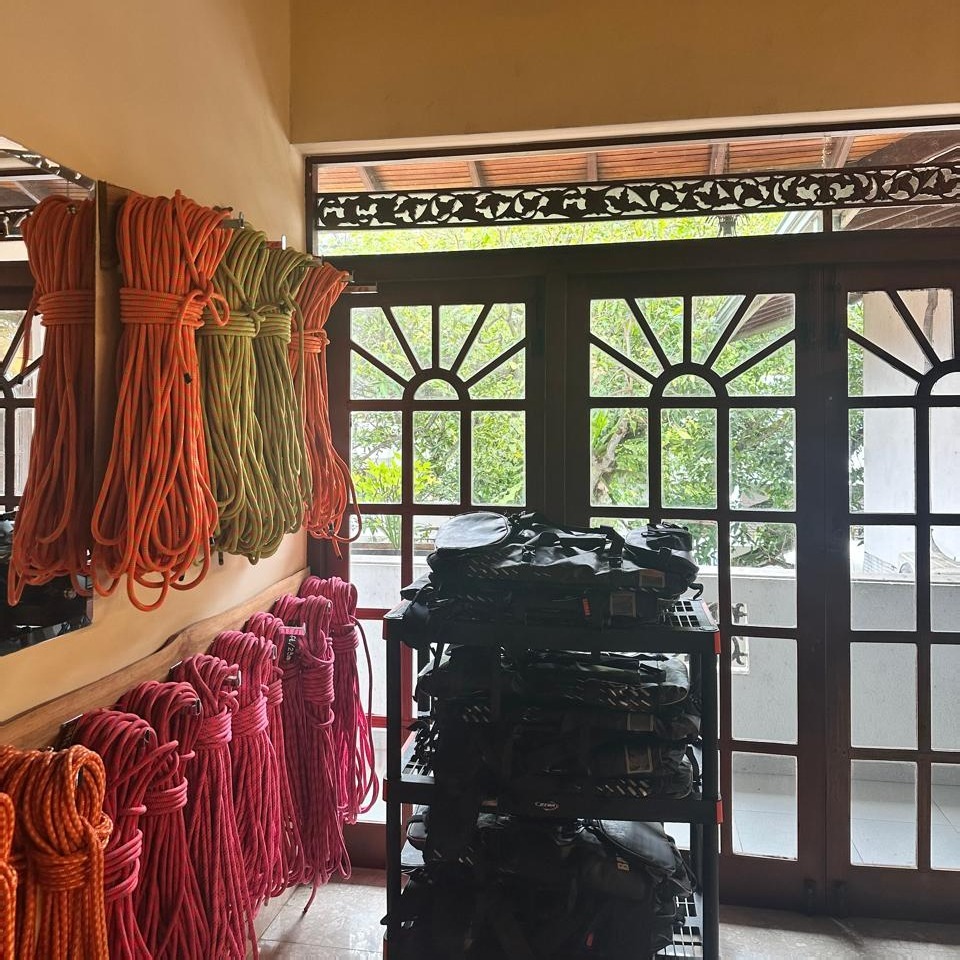
Image: Equipment deployed during the swift water and rope rescue trainings by Taiwan's National Fire Agency at the A-PAD Sri Lanka office | Crisis Response Journal
For Taiwan, these challenges hit close to home. “We know Taiwan is one of the most vulnerable countries in the world,” said Hsiao Huan-Chang, Director General of Taiwan's National Fire Agency (NFA) under the Ministry of the Interior. “We need to face that, and we need to find the best solutions through training courses for responding to disasters.”
Such a reality ultimately forces a bigger question: If Taiwan is facing this, so are its neighbours. “Water-based rescue has always been a main focus for us, but how can we promote that?” asked Huan-Chang.
The solution lies in cross-border collaboration. Working with the Asia Pacific Alliance for Disaster Management (A-PAD) in Sri Lanka since 2018, the NFA found itself building a network of shared expertise and capacity across borders. The peak of this partnership hit two years ago, with the 2024 Joint Indo-Pacific Region Swift Water and Rope Rescue Training Program. During 14 intensive days, members of A-PAD Sri Lanka’s Search and Rescue (SAR) team trained alongside responders from Taiwan, Japan, the Philippines, and Thailand.
The training took place at the NFA’s Training Center, a 109-hectare facility built to mimic the chaos of a hazard. Trainees were thrown into a 200-metre artificial river channel, powered by high-speed pumps to create sudden currents and whirlpools – an environment designed to drill survival skills, boat operations, and high-stakes rope extractions.
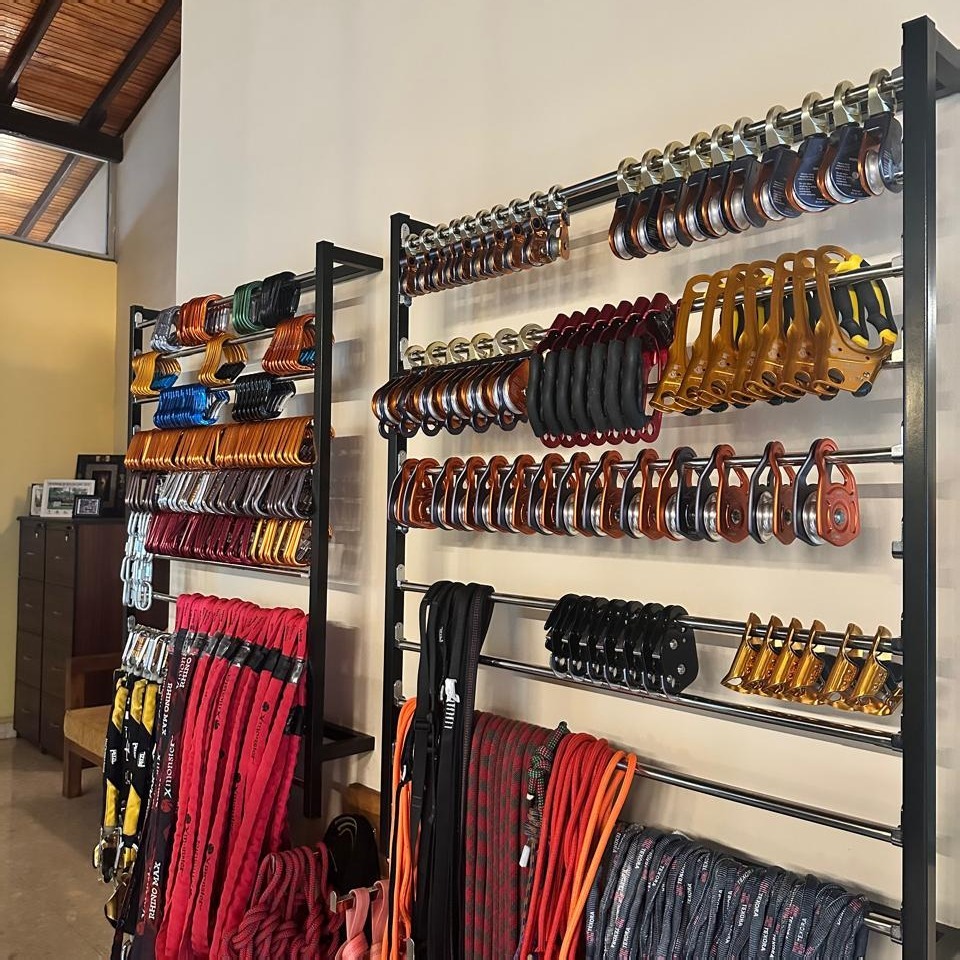
Image: Equipment deployed during the swift water and rope rescue trainings by by Taiwan's National Fire Agency at the A-PAD Sri Lanka office | Crisis Response Journal
However, the simulations are only half the curriculum. “We provided courses not only inside the facility, but also on the river, and we also have a mountainous area for more practical training for both instructors and trainees,” Huan-Chang told CRJ. That meant pushing teams into the Shugulan River in Hualien County, Taiwan, navigating unpredictable night-time currents where the operational risks are entirely real.
Even then, the controlled chaos of the trainings is only a rehearsal for what many of these responders face every day. As climate risks escalate, we’re witnessing a quiet shift where preparedness is becoming a collective responsibility, spearheaded by the very organisations building capacity across the region. So, when the water rises, responders can answer the call, more prepared and united than ever.