‘Made in Europe’: What the EU’s new industrial rules mean for climate action
Josh Gabbatiss, Molly Lempriere, and Orla Dwyer look at the EU’s new industry and ‘Made in Europe’ rule and what it means for climate action for Carbon Brief.
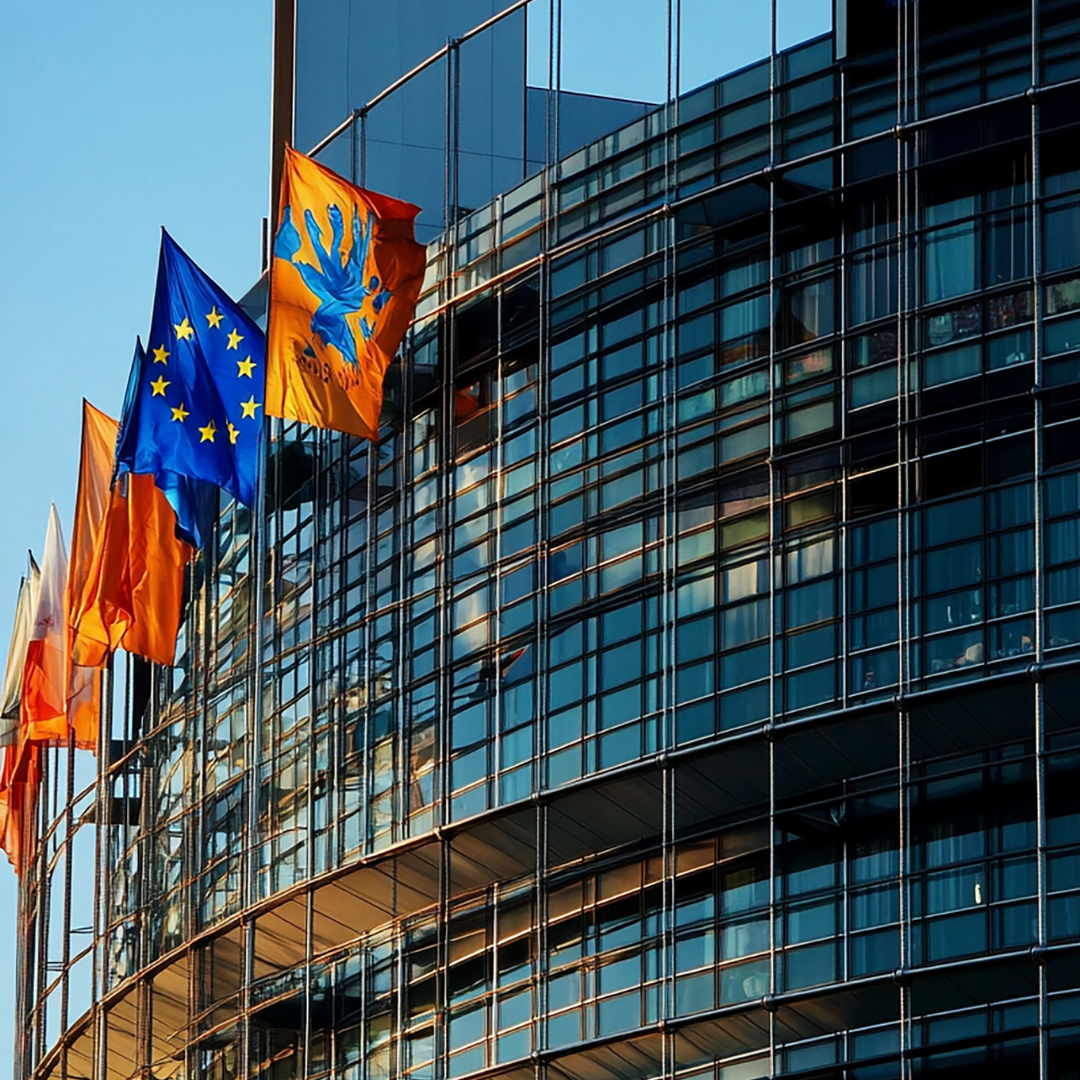
Image by Madushika | Freepik
Josh Gabbatiss covers climate and energy policy for Carbon Brief and holds a BSc in zoology from the University of Bristol, UK. Molly Lempriere holds a BA in English literature from Brunel University, UK. Orla Dwyer has a BA in journalism from Dublin City University, Ireland, and is a food, land and nature journalist for Carbon Brief.
The European Commission has put forward a plan to boost production of EU-made, low-carbon steel, cement and renewables in an effort to rely less on other countries. The proposed ‘Industrial Accelerator Act’ (IAA) aims to boost resilient and decarbonised industrial production in EU manufacturing, says the commission.
Under the proposal, a percentage of products bought from ‘energy-intensive industries’ and other sectors under public procurement deals would be required to be ‘low-carbon’ and made in the EU. This includes targets for steel, aluminium and electric vehicle (EV) parts.
The publication of the proposed IAA follows weeks of delays as the EU attempts to boost its manufacturing industries, which have been struggling with international competition and high energy costs, while also supporting decarbonisation. Industries such as steel, cement and chemicals produce roughly a fifth of the EU’s emissions, so decarbonising them will be essential for achieving the bloc’s net-zero goals.
It was first announced in the European Commission’s 2024 political guidelines, laying out its priorities for the five years out to 2029. In the section concerning the EU’s plans for a ‘clean industrial deal’ – referring to broader plans to support industries and accelerate their decarbonisation – the guidelines stated: “We will put forward an industrial decarbonisation accelerator act to support industries and companies through the transition.”
When the clean industrial deal was subsequently released in February 2025, it said the promised act would introduce ‘clean, resilient, circular, cybersecure’ criteria that would: “strengthen demand for EU-made clean products”. The act was also intended to: “speed up permitting for industrial access to energy and industrial decarbonisation and develop a voluntary label on the carbon intensity of industrial products”.
Underpinning these plans was the idea of increasing demand for low-carbon products in public and private procurements – in particular, those that were ‘Made in Europe’. The proportion of products that will be included under the ‘Made in Europe’ definition remains unclear. In the final proposal, the commission notes it will: “tailor requirements to the specific structure, maturity and dependencies of each sector”.
What is in the IAA proposal?
Following internal negotiations, the European Commission released its IAA proposal on March 4, 2026. It says the proposal will: “increase demand for low-carbon, European-made technologies and products”. The act sets a goal of increasing manufacturing’s share of EU GDP to 20 per cent by 2035, up from 14.3 per cent in 2024.
It introduces ‘targeted and proportionate’ low-carbon and ‘made in EU’ requirements for public procurement and public support schemes for specific sectors. These will initially apply to steel, cement, aluminium, cars and net-zero technologies – defined within the proposal as batteries, battery energy storage systems (BESS), solar PV, heat pumps, wind turbines, electrolysers and nuclear technologies. It also establishes a framework that could be extended to other energy-intensive sectors in the future.
The commission notes that these sectors have been chosen due to their strategic importance, as well as being: “essential enablers of the clean transition and vital to downstream industries”. However, it says they are facing declining production in Europe, slower decarbonisation investments and global competition and market distortions, such as unfair subsidies.
For steel, the proposal would introduce a requirement for public procurement and public support schemes to use low-carbon steel within the automotive and construction industries. This will help create market demand and give investors confidence and predictability, boosting innovation and making clean steel a core part of the EU’s industrial future, says the commission.
However, this falls short of the 70 per cent low-carbon steel requirement that had been included in an earlier draft of the act, according to Reuters. Other earlier drafts of the IAA proposal had also included an emissions label for steel.
This voluntary carbon-intensity label had previously been set out within the clean industrial deal and had originally been expected to come into effect in 2025, before being pushed back and, ultimately, excluded from the IAA.
Beyond steel, the IAA sets minimum ‘Made in EU’ requirements for public procurement of 70 per cent for EVs, 25 per cent for aluminium and 25 per cent for cement.
The European Commission will now offer the UK, Japan and other like-minded countries the opportunity to be included under the ‘Made in Europe’ manufacturing targets, if they offer reciprocal access to EU-based manufacturers, according to the Financial Times. The outlet adds that this is being welcomed by the UK government, which had lobbied for such access for months.
The measures within the IAA are in line with the recommendations of the Draghi report on EU competitiveness, says the commission. As such, it says they are designed to: “increase value creation in the EU, strengthening our industrial base against the backdrop of growing unfair global competition and increasing dependencies on non-EU suppliers in strategic sectors”.
Alongside the introduction of requirements on public procurement within the bloc, the IAA proposal highlights that the EU is: “committed to maintaining that openness as a key source of economic strength and resilience”.
The EU hosted almost a quarter of global foreign direct investment in 2024. To further support such investment and ensure the benefits extend to technology transfer and job creation, the IAA introduces additional conditions for international investments.
These would apply for investments of more than €100 million in emerging sectors such as batteries, EVs, solar PV and critical raw materials by companies that hold more than 40 per cent of global production capacities. Conditions would include EU companies holding a majority share, technology transfer, integration into EU value chains and job creation, according to the European Commission. There would also need to be a guarantee that a minimum of 50 per cent of employees are European.
Additionally, EU member states would be required to set up a single digital permitting process to speed up and simplify manufacturing projects under the IAA. This would include dedicated single points of contact and maximum timelines of 18 months for certain projects, such as energy-intensive industry decarbonisation projects or those located in ‘industrial acceleration areas’.
Member states would designate these areas to encourage strategic manufacturing clusters, it says. The commission adds that projects within these areas would benefit from improved co-ordination and access to infrastructure, finance and skills ecosystems, as well as faster permitting.
What could the act mean for carbon emissions?
The IAA could save around 30.6 million tonnes of CO₂ (MtCO₂) in 2030, according to the European Commission.
According to the impact assessment published alongside the proposed act, the changes brought in for the steel, cement, aluminium, battery and vehicle sectors would drive significant CO₂ reductions by 2030.
The document outlines that producing more batteries in the EU, rather than relying on imports from China, could save 25.6 MtCO₂, and the 25 per cent low-carbon steel target in the automotive and construction sectors could save around 3.4 MtCO₂. Moreover, vehicle manufacturing emissions could drop by 0.7 MtCO₂ due to shifts in production, while the five per cent low-carbon cement target could save 0.69 MtCO₂, and the 25 per cent low-carbon aluminium target could save 0.22 MtCO₂.
The report estimates that all of these savings in CO₂ would be worth more than €3 billion in avoided climate damages. Streamlining the process for permitting to accelerate decarbonisation projects should also: “lead to an accelerated pace of GHG (greenhouse gas) savings”.
While the report adds that carbon emissions and production volumes in the EU iron and steel sectors have dropped ‘almost in parallel’ between 2005 and 2023, projections show that these emissions will need to decline faster to meet future EU climate targets.
This piece was originally published by Carbon Brief and can be found here.